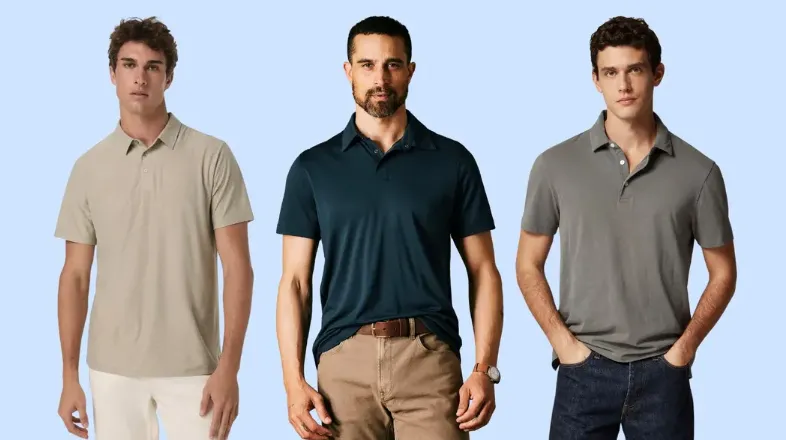
René Lacoste designed the polo shirt in 1926 for tennis. Nearly 100 years later, it’s still one of the most worn garments across sport, business, and leisure. That staying power isn’t sentiment. It’s function. The polo collar adds enough visual structure to lift the garment above casual, while the relaxed body keeps it comfortable through long days. Well-made men’s polo shirts do two things at once. They look sharp without requiring effort. That combination is what keeps them relevant.
What Makes the Polo Collar Different From a Regular Shirt?
The collar is the functional centre of the garment. It’s what separates a polo from a regular t-shirt and what gives it the ability to work in settings where a plain crew neck wouldn’t. A polo collar that holds its structure after washing signals quality. One that curls or flattens signals the opposite.
The collar needs internal construction, typically an interfaced rib or woven placket facing, to maintain its stand. Mass-produced polos skip this. The collar looks fine in the store and collapses after two washes. Quality polos use rib knit collars that return to shape because the fibre has the memory to do it.
Does Fabric Choice Determine Whether a Polo Looks Casual or Smart?
Completely. A heavyweight pique cotton polo in navy reads professional. The same silhouette in a thin jersey knit reads as casual-at-best. Pique cotton, the fabric with the small textured weave pattern, was specifically chosen for the original polo because it handles perspiration, holds its shape under wear, and looks more structured than jersey.
Performance fabric polos in moisture-wicking polyester blends have grown significantly in market share. They work for active use and smart-casual settings but rarely cross into genuinely formal environments. The sheen of performance fabric reads differently than the matte texture of cotton pique. Both have a place. They’re not interchangeable.
How Does Fit Affect How Smart a Polo Looks?
A polo that’s too loose looks sloppy regardless of the fabric quality. The excess fabric bunches at the waist and the sleeves. One that’s too tight creates visible stretch across the chest and constrains movement. The right fit skims the chest and torso without pulling, and the sleeve hem sits at the mid-bicep.
The hem length matters too. A polo worn untucked, which is almost always, should fall just below the hip bone. Too short and it looks like the shirt has been bought in the wrong size. Too long and it starts to look like a dress shirt worn without pants. Hem length is something most men don’t check when buying and regret when wearing.
What Is the Right Number of Collar Buttons?
Standard polos have a two or three button placket. Two buttons is cleaner and more modern. Three buttons allows more adjustment but creates a longer front opening that some find awkward at the fully-buttoned position.
The top button etiquette is worth knowing. In professional or smarter casual settings, popping the top button open reads as relaxed but intentional. In formal settings, both buttons closed is standard. The placement of the top button at the right point on the collar stand affects whether the collar lays flat or gaps. A poorly placed button causes the collar to pull open even when fastened.
How Do You Style a Polo for Different Settings?
For a smart-casual work environment, a polo in navy, white, or mid-grey with flat-front chinos and loafers is clean and professional without being stuffy. Add a structured blazer over the top and the look extends into client meetings or evening events.
For weekend use, the same polo with well-fitted dark denim and clean sneakers works without overthinking. The polo does the dressing up. The denim keeps it relaxed. That balance is exactly what makes the garment useful across different days.
How Long Should a Quality Polo Last?
A quality cotton pique polo, washed correctly, should maintain its shape and colour for three to five years of regular wear. Washing in cold water and hanging to dry rather than machine drying significantly extends the life. High-heat drying shrinks cotton and weakens fibre over time.
The collar is usually the first thing to show wear. If the collar starts curling or stretching after a few months, the construction was inadequate. A polo that holds its collar shape after 50 washes was made properly. One that fails in the first season wasn’t worth the price tag regardless of what the label said.
What Colours Offer the Most Everyday Versatility?
White, navy, and mid-grey are the three you can pair with almost anything without thinking. They work with denim, chinos, shorts, and trousers. Classic racing green and burgundy are strong secondary choices with slightly more character but still wide pairing options.
Bold or bright colours, yellow, orange, loud coral, are harder to style and more setting-specific. They can look great in the right context. But versatility is not their strength. If you’re building a wardrobe around polos, start with the neutrals and add colour after you’ve got the foundation covered.

“Welcome to the ultimate destination for the best Instagram captions! I’m James, your go-to guide for crafting the perfect caption to match any moment. Whether you’re posting a selfie, a scenic shot, or a fun group picture, I’ve got you covered with creative, catchy, and relatable captions for every occasion. Dive into my collection and discover the perfect words to express yourself on Instagram!”