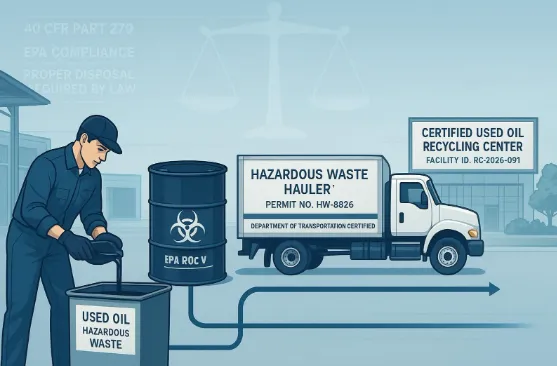
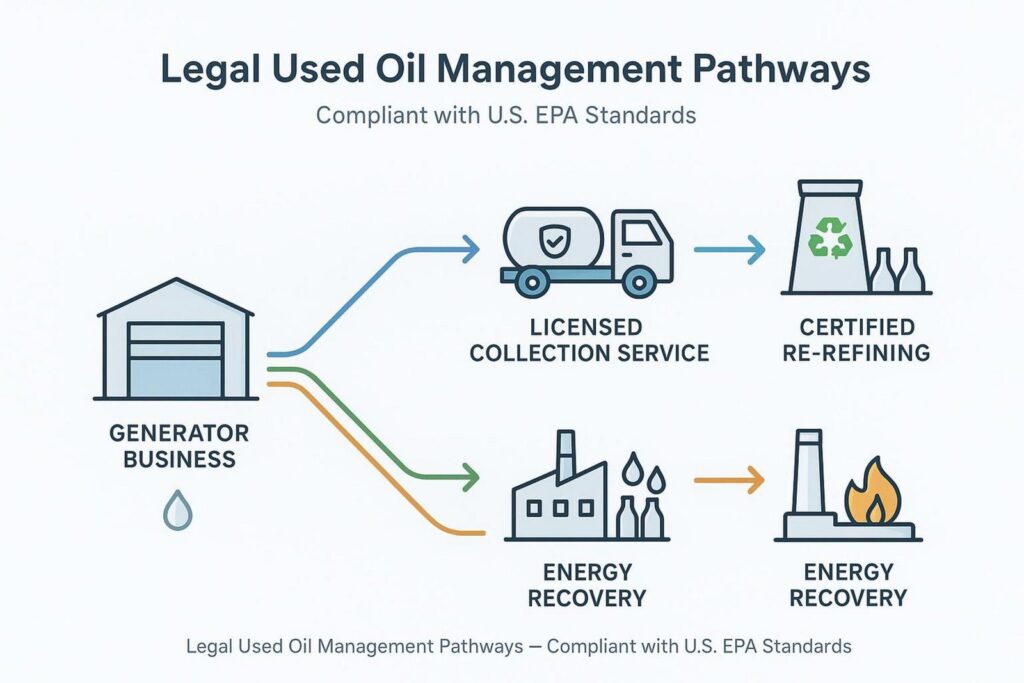
To avoid painful regulatory fines, the safest legal used oil options include working with EPA-licensed collection services, using certified re-refining facilities, or joining approved energy recovery programs.
Managing waste oil is not just about removing a messy byproduct; it is about following strict laws that protect both the environment and your profit margins. Whether you handle industrial lubricants or are researching used cooking oil options for a commercial kitchen, the key is professional oversight and careful documentation.
For any business that generates waste oil, the road to compliance can feel like walking through a minefield. Once you understand the “cradle-to-grave” responsibility set by environmental laws, using professional services clearly becomes an investment in your company’s long-term health.
By choosing verified disposal paths, you make sure your waste is managed in a way that lowers your legal risk and improves resource recovery.
What Counts as Used Oil and Who Is Responsible?
Defining Used Oil: Types and Sources
According to agencies like the EPA, “used oil” is any oil made from crude oil or any synthetic oil that has been used and then contaminated by physical or chemical impurities. It’s not just the dark sludge drained from a car’s oil pan. It includes many fluids used across different industries. If the base is petroleum or synthetic and it has been used, it probably fits this definition.
- Hydraulic fluids
- Transmission fluids
- Metalworking lubricants
- Certain coolants with a petroleum or synthetic base
Sources of used oil are just as varied. Examples include:
- Auto repair shops and quick-lube centers
- Manufacturing plants and factories
- Power generation facilities
- Farms and small agricultural operations
It is very important to separate “used oil” from “waste oil.” Waste oil might include unused oil that was spilled, or oil mixed with hazardous substances. Knowing exactly what you are storing is the first step in picking the right disposal method and avoiding mixing materials that could make disposal far more expensive.
Legal Responsibilities of Oil Generators and Handlers
The legal idea of “cradle-to-grave” liability is the base rule of waste management. As a generator of used oil, you stay legally responsible for that oil from the moment it is drained until it reaches its final treatment or recycling point-even after it leaves your site in a third-party truck. If a disposal company you hired dumps your oil illegally, regulators can still come back to you for cleanup costs and penalties.
This responsibility requires real due diligence. You must store oil safely, label it correctly, and hand it over only to transporters with valid EPA identification numbers. Your responsibility also includes the “rebuttable presumption,” which assumes used oil is mixed with hazardous waste unless you can show otherwise through testing or clear process knowledge. Keeping this chain of custody intact is both a legal duty and a strong defense.
What Are the Risks of Improper Used Oil Disposal?
Legal Fines and Regulatory Penalties
The financial hit from improper disposal can be severe. Federal and state regulators can apply large fines under the Resource Conservation and Recovery Act (RCRA). These fines are often charged per day, per violation. A small mistake in labeling or a minor leak that goes unreported can quickly turn into a six-figure problem. With monitoring tools becoming more digital and more strict in 2026, trying to “fly under the radar” is no longer a realistic approach.
On top of administrative fines, criminal charges may be filed against business owners or managers who knowingly dump oil illegally or falsify records. These penalties are meant to discourage illegal behavior and reflect the high cost of cleaning up pollution. Once oil reaches groundwater or soil, cleanup costs alone can be higher than the value of the business, making compliance the only smart financial choice.
Financial and Business Consequences
Fines are only the first wave of damage. The longer-term financial impact can be even worse. A business involved in a public environmental violation often suffers long-lasting brand harm. In a time when investors and customers pay close attention to corporate social responsibility, being seen as a “polluter” can lead to lost contracts and fewer customers. Many supply chains now require proof of environmental compliance before they will sign you as a vendor.
Insurance companies are also less willing to cover businesses with a poor waste management history. Past spills or citations can lead to much higher premiums or even cancellation of environmental liability coverage. That leaves your business exposed to future accidents with no backup. Poor disposal choices turn a manageable operating cost into an unstable and potentially business-ending risk.
How Do Used Oil Disposal Regulations Work?
Federal EPA Requirements and RCRA Standards
At the federal level, the EPA regulates used oil under 40 CFR Part 279. These rules encourage recycling used oil instead of treating it as hazardous waste. By following these management standards, businesses can avoid the much tougher and more expensive hazardous waste rules. RCRA standards focus on keeping oil from leaking during storage and transport, so it stays a usable resource for re-refining.
These federal rules set a basic level of protection for the whole country. They require:
- Storage in tanks or containers that are in good condition and not leaking
- Use of the “rebuttable presumption” test for halogen levels to check for contamination with chlorinated solvents
Following these federal standards is the minimum requirement for any business that operates in the United States.
State and Local Environmental Regulations
Federal law sets a base level, but many states go further. States such as California and Massachusetts often have stricter rules and may classify used oil as hazardous waste no matter how clean it is. Cities and counties can also have sewer rules that ban any oil from going into the wastewater system, even in very small amounts. The business owner must stay aware of the specific rules in each location.
Local fire codes are also important for used oil management. They can control:
- How close storage tanks can be to buildings
- The type and size of secondary containment
- Required fire suppression systems nearby
Breaking local fire or zoning codes can lead to immediate orders to stop operations until the facility is corrected.
Used Oil Storage and Labeling Rules
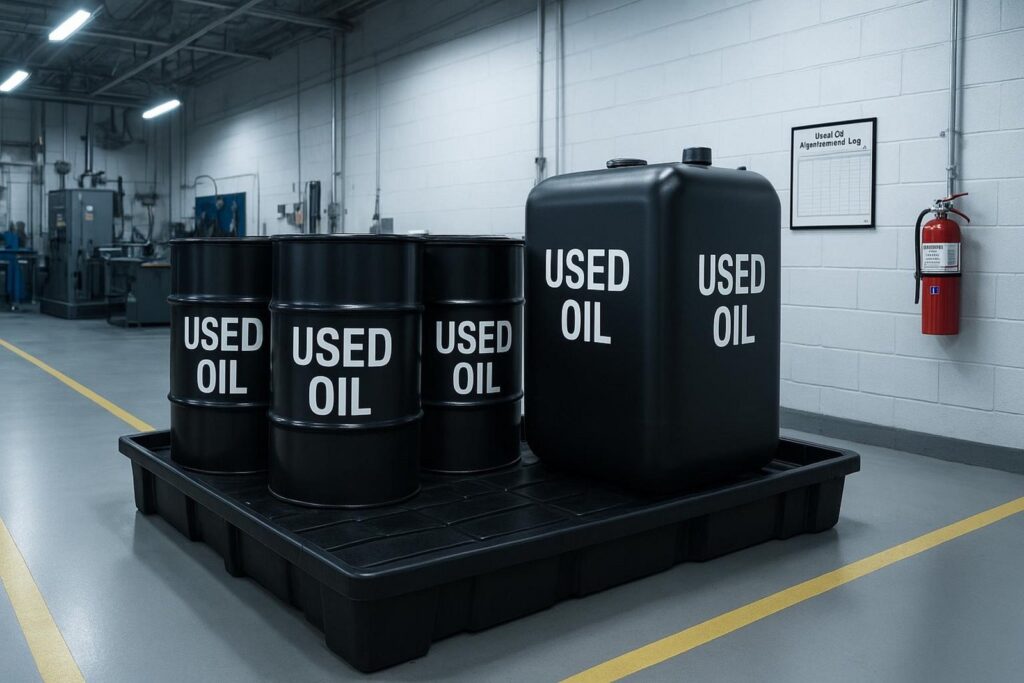
Storage rules for used oil are simple but strict. Containers must be clearly labeled with the exact phrase “Used Oil.” Many people use labels like “Waste Oil” or “Old Motor Oil,” but that can put you under a harsher set of regulations. Using “Used Oil” is often required to stay under the Part 279 rules. Containers must also stay closed except when adding or removing oil, to prevent spills and evaporation.
Secondary containment is another key rule. This means placing tanks or drums inside a system-such as a berm, tray, or double-walled tank-that can hold all of the oil if the main container fails. This backup setup keeps spills from reaching soil or floor drains. Regular inspections of storage areas should be recorded to show that you are actively working to prevent releases.
Record Keeping and Documentation Expectations
For regulators, if it is not documented, it might as well not have happened. A clear paper trail (or digital records) is your best protection against fines. You should record every shipment of used oil that leaves your site, noting:
| Required Detail | Example |
| Transporter name and address | ABC Used Oil Services, 123 Main St. |
| Transporter EPA ID number | XYZ123456789 |
| Quantity shipped | 500 gallons |
| Date of pickup | 04/15/2026 |
These records are usually kept for at least three years, but many businesses keep them longer. You should also retain lab reports for any testing you do on your oil. Large generators often test used oil for halogens or heavy metals to prove that the waste stream is consistent and not contaminated. These records satisfy regulators and give you confidence that your service providers are handling your waste correctly.
Which Legal Used Oil Disposal Options Are Available?
Licensed Used Oil Collection Services
The most common and dependable option is hiring a licensed used oil collection service. These companies handle the planning and transport of waste oil. They usually offer regular pickups with vacuum trucks and manage all the required paperwork. By using a licensed service, you hand over much of the compliance burden to experts with the right equipment and systems.
When choosing a collection service, make sure they are fully permitted and insured. A good collector will give you a manifest for every pickup as proof of legal transfer. Many also offer add-on services such as:
- Cleaning oil-water separators
- Supplying fresh lubricants
- Helping set up proper storage and labeling
This can create a simple, closed-loop system for your facility.
Certified Oil Recycling and Re-Refining Programs
Recycling is often seen as the best practice for used oil. Re-refining takes used oil and removes dirt, water, and additives, bringing it back to a clean base oil. That base oil can then be used to make new motor oils and lubricants that perform just as well as products made from new crude oil. Producing re-refined oil usually takes less energy than refining new crude, which is better for the environment.
By joining a re-refining program, your business supports a circular use of resources. Many companies now request that their used oil go to re-refiners instead of being burned for fuel. This helps the environment and can also support your sustainability goals and public reporting by showing that you conserve resources and lower your carbon footprint.
Energy Recovery and Alternative Processing
Another legal option is energy recovery, where used oil is burned as fuel in industrial furnaces, boilers, or kilns. Oil has a high energy content, so it is an efficient fuel for heavy industry such as asphalt plants and steel mills. This practice, called “burning for energy recovery,” is tightly controlled to keep air emissions within safe limits.
Some businesses use on-site used oil heaters to handle their own oil while cutting heating costs. These units must meet specific EPA emission standards, and they are usually limited to burning oil generated at the same site or from “do-it-yourself” oil changers. While this option can save money, it demands regular maintenance and attention to local air quality rules to stay compliant.
Special Handling for Oil Filters and Contaminated Materials
Used oil is only part of the picture. Materials that contact oil often need special handling too. Used oil filters, for example, usually cannot go straight in the trash. In most areas they must be:
- Hot-drained (while warm) for a set time, or
- Crushed to remove as much free-flowing oil as possible
Once drained or crushed, many filters can be recycled as scrap metal.
Absorbents like rags, pads, “pigs,” or clay granules also follow specific rules. If they are dripping with oil, they are typically managed as used oil. If they are damp but not dripping, they may go to solid waste, but the rules vary by state. Handling these materials correctly is as important as managing the oil itself, since inspectors often check them and can issue extra fines if they are mishandled.
How Can Businesses Select a Trustworthy Used Oil Disposal Provider?
Verifying Licensing and Compliance Credentials
Start by confirming the provider’s EPA Identification Number. This is public information and shows the company is registered to handle regulated waste. Also ask for copies of state and local permits. If a provider will not share these documents or seems unsure about local rules, treat that as a serious warning sign.
Next, review the provider’s compliance record. Many state agencies now have online tools where you can look up past violations or enforcement actions. A pattern of spills or “paperwork mistakes” is a risk you do not want. A provider with a clean history is far less likely to expose you to enforcement actions or bad publicity.
Evaluating Experience and Reputation
Experience counts in the waste industry. A company operating for many years usually has real knowledge of changing rules and the practical challenges of hauling oil. Look for references or case studies from businesses similar to yours. If you run a large factory, choose a provider used to handling large volumes and a variety of industrial fluids, not just small auto shops.
Reliable reputation comes from consistent performance. Ask yourself:
- Do they arrive when they say they will?
- Are drivers well-trained and professional?
- Do they provide clear documentation right at pickup?
A strong provider acts like a partner, offering tips on better storage setups and alerting you to upcoming rule changes. They should support your compliance program, not create new problems.
Reviewing Collection, Transportation, and Tracking Practices
Ask potential providers about their spill prevention and response plans. Their trucks should be well-maintained and equipped to deal with leaks during loading and unloading. Also ask about their tracking tools. Many newer providers use GPS and digital manifests, so you can see exactly where your oil goes after it leaves your site, reinforcing your “cradle-to-grave” management.
You should also ask where the oil ultimately goes:
- Is it sent to a re-refinery?
- Is it burned for energy recovery?
- Does the provider own the end facility or use partners?
Knowing the final destination helps you judge the quality of the whole chain. A provider that is open about its downstream partners is much more likely to be operating within the law than one that hides behind “proprietary” processes.
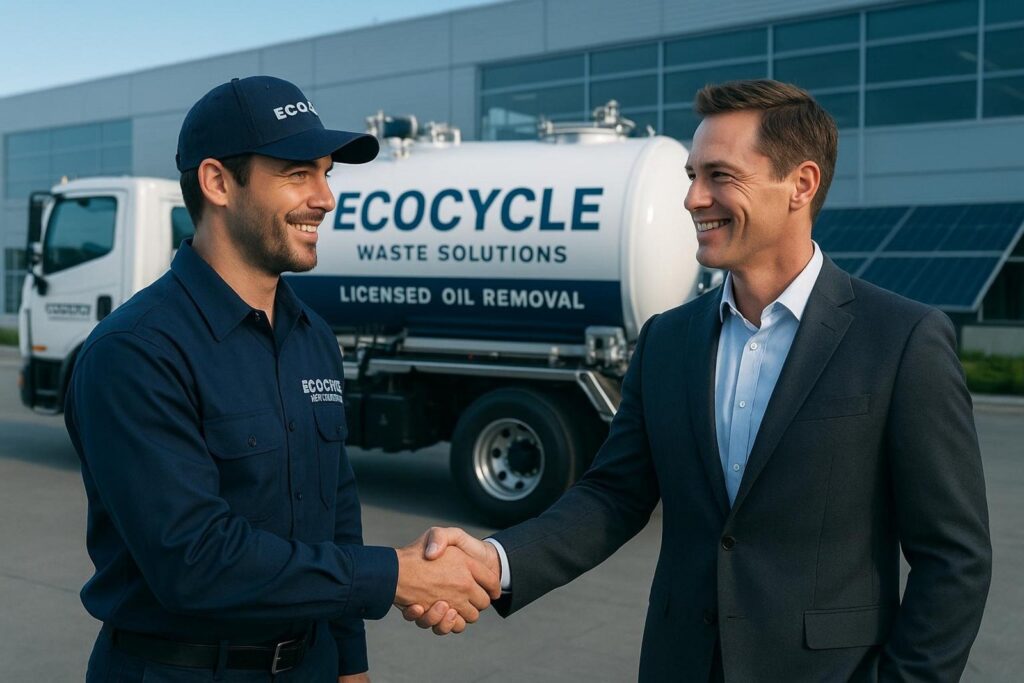
Reviewing Environmental and Safety Standards
Take time to look at the provider’s internal safety and environmental programs. Do they hold any environmental management certifications such as ISO 14001? Do they train employees on safety and spill response on a regular schedule? A company that protects its own staff and facilities is more likely to protect your site and the environment as well. Choosing a partner like Save Fry-Oil ensures that you are working with experts dedicated to sustainable practices and cutting operating costs through responsible oil management.
Insurance is another key factor. Confirm that the provider carries adequate environmental impairment liability insurance. This type of coverage helps protect you if they cause a spill or other environmental damage while handling your waste. Ask to be added as an “additional insured” on their policy to give your business the strongest possible protection from third-party claims.
Frequently Asked Questions about Legal Used Oil Disposal
How Long Can Used Oil Be Stored Legally?
Under federal EPA rules, there is no fixed time limit on how long you can store used oil, as long as it is stored safely and does not create a risk. Many states and fire codes, however, do set time limits-often between 90 and 180 days-to prevent large build-ups of flammable liquid. Keeping oil for long periods also raises the chance of container failure and leaks, so regular pickups are a good practice even if you are within legal limits.
Large volumes can also trigger Spill Prevention, Control, and Countermeasure (SPCC) rules. If your total above-ground storage capacity is more than 1,320 gallons, you must have a formal SPCC plan signed by a professional engineer. Keeping your on-site volume lower through frequent pickups can help small businesses stay below this threshold and avoid the extra cost of plan development and maintenance.
Does Used Oil Have to Be Recycled or Can It Be Disposed?
In most situations, used oil must be recycled or burned for energy recovery. Dumping used oil in a landfill or pouring it down a drain is illegal and subject to heavy fines. EPA rules are written to keep oil out of regular trash and sewer systems and move it into recycling streams instead. If oil is so contaminated that it cannot be recycled, it must be handled as hazardous waste, which brings tighter rules and much higher disposal costs.
Recycling used oil also makes sense from a business point of view. Oil does not actually wear out; it just gets dirty. This makes it a useful commodity. Many collectors will pay you for your used oil, or at least haul it away at no charge, because they can sell it to re-refiners or fuel blenders. Treating used oil as a resource instead of a nuisance helps you stay compliant and can save or even earn money.
What Are the Penalties for Improper Storage or Disposal?
Penalties depend on how serious the violation is and whether it was intentional. Small issues, such as missing labels, may result in a warning and a modest fine if you fix them quickly. More serious violations, like illegal dumping or failing to report a major spill, can bring civil penalties in the tens of thousands of dollars per day. In cases where someone knowingly breaks the law, criminal charges can lead to jail time.
You may also face civil lawsuits. If your actions contaminate a neighbor’s land or a local water source, affected parties may sue for damages. These lawsuits can continue for years and cost far more than the original regulatory fines. The financial risk from non-compliance can grow without limit, which makes cutting corners a very bad gamble.
What Happens if Used Oil Is Mixed With Hazardous Waste?
If used oil is mixed with hazardous waste-such as certain solvents, gasoline, or strong degreasers-the whole mixture is usually treated as hazardous waste. This is a worst-case situation for most businesses, because the cost to handle hazardous waste is far higher than the cost to recycle clean used oil. Generators of hazardous waste also face tougher reporting requirements and stricter storage rules.
To prevent this, set a clear “no mixing” rule in your shop or facility. Make sure all staff know that only used oil goes into the used oil tank. Provide separate, well-labeled containers for other fluids and chemicals. Periodic testing, such as checking for halogens, can help you spot contamination early before a large tank of oil becomes too dirty to recycle cheaply.
Final Thoughts: Preventing Fines and Protecting the Environment With Trusted Used Oil Solutions
As more companies focus on sustainable operations, managing used oil is moving from a back-room chore to a visible business priority. New tools such as smart tanks that track levels and detect leaks in real time are becoming more common, letting businesses automate much of their compliance work. Combined with the growth of high-quality re-refined lubricants, this means the “waste” you generate today can become part of the quality products you buy in the future.
Building a strong relationship with a reliable disposal provider can also lead to wider environmental gains. Many providers now offer waste audits that help businesses cut oil use at the source through better maintenance, filtration, and fluid management. When you see used oil management as part of a larger circular economy strategy, you can turn a regulatory task into a clear example of efficiency and environmental care. True peace of mind comes from knowing every gallon is tracked, every manifest is filed, and your business is protected from the financial shock of environmental violations.

“Welcome to the ultimate destination for the best Instagram captions! I’m James, your go-to guide for crafting the perfect caption to match any moment. Whether you’re posting a selfie, a scenic shot, or a fun group picture, I’ve got you covered with creative, catchy, and relatable captions for every occasion. Dive into my collection and discover the perfect words to express yourself on Instagram!”