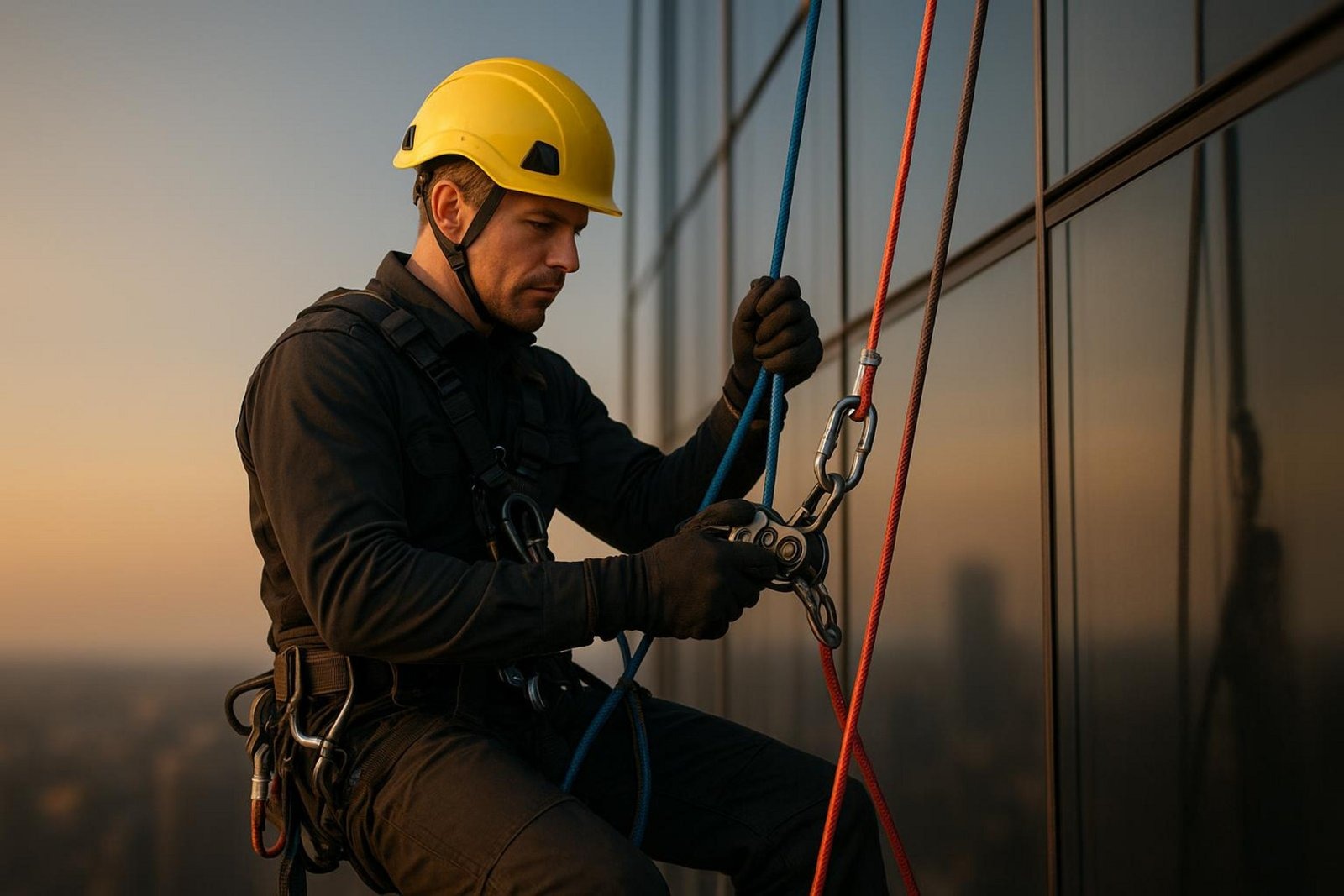
Rope access services give businesses a smart way to handle maintenance, inspections, and repairs in hard-to-reach places. Compared with scaffolding or cranes, this method is faster, safer, and more cost-effective, which cuts project spend and reduces downtime. Using proven techniques and well-trained technicians who can work in complex areas, key tasks get done quickly and safely, helping profits.
For companies in the UK, learning the details of these methods can lead to big gains. From high-rise building care to tricky industrial checks, the agility and accuracy of rope access in the UK is changing how work at height gets done, leading to clear savings and better efficiency.
What Is Rope Access Service?
Rope access is a specialist way to do work at height using ropes and precise equipment to stay safe and in position. It is more than a simple alternative and has changed how many sectors handle maintenance, inspections, and construction in places that are hard or impossible to reach. It started in climbing and caving and has grown into a professional trade with strict safety rules and procedures.
This method lets technicians reach tough spots without large scaffolding or heavy machines, giving a simple and flexible option. Its main strength is the ability to adapt to many jobs and locations, from checking wind turbines to repairing building facades or maintaining offshore platforms.
How Does Rope Access Work?
Rope access uses ropes and special gear so trained technicians can go up, down, and across structures. The system usually includes two ropes: a working line and a backup line, each fixed to separate anchors for an extra safety layer.
Technicians use descenders, ascenders, harnesses, and other climbing devices, keeping full control of their position and movement during the job.
The process starts with careful planning and a risk assessment to spot hazards. After setting anchor points, technicians can get started fast, often within minutes. This quick setup, along with precise positioning at the exact work spot, helps tasks get done accurately and efficiently, even in very tough conditions.
Key Differences from Traditional Access Methods
The gap between rope access and options like scaffolding or cranes is clear. Traditional methods usually need long prep time, big setups, and lots of gear. They can be disruptive, costly, and still fail to reach exact locations, which causes delays and extra spend.
Rope access needs little ground space and short setup time. It uses smaller teams and less equipment, so there are fewer interruptions and no need to change routines for bulky machinery. This speed leads to faster setup, fewer disruptions, and quicker job completion, especially where space, time, or access is tight. The result is a focused, low-impact way to work at height.
Comparing Rope Access to Scaffolding and Heavy Machinery
For accessing high or tight areas, businesses often compare classic solutions like scaffolding and heavy machines with the faster, lighter approach of rope access. The choice affects timelines, budgets, and day-to-day operations.
| Factor | Rope Access | Scaffolding / Cranes |
| Setup time | Minutes to hours | Days to weeks |
| Crew size | Small teams | Larger teams |
| Site impact | Low footprint | High footprint |
| Permits | Fewer in many cases | Often several |
| Access precision | High, point-specific | Varies, sometimes limited |
| Cost impact | Lower overall | Higher overall |
Cost and Time Implications
Traditional options like scaffolding and heavy machinery are known for high costs and long timelines. Building and removing scaffolding can take days or weeks, adding big labour, rental, and transport bills.
Cranes and other lift gear bring extra costs for moving, setup, and operation. These routes often need several permits and can slow projects down. This is why many companies increasingly look to solutions such as Rope Access in London when aiming to cut both time and expense.
Rope access can deliver large cost savings. Without expensive scaffolding and heavy gear, overall spend can drop by up to 30%. Technicians can be set up in about 30 minutes and start work right away. Fast setup and pack-down cut labour hours and reduce downtime linked to traditional setups, speeding completion by as much as 30%.
Access in Confined or Hard-to-Reach Areas
Many sites have tight, vertical, or complex spaces that traditional access cannot reach well, such as silos, tanks, shafts, or detailed facades. Scaffolding may be impossible to build, and heavy machinery can lack the needed precision or movement.
Rope access works well in these places. Its flexibility lets technicians move around curved surfaces, irregular facades, and tight areas that other methods cannot reach. This means teams can reach every area accurately and carry out full inspections, maintenance, and repairs where other methods fall short.
Safety Considerations and Worker Exposure
Safety matters for any work at height, but traditional methods bring certain risks. Large scaffolds can clutter work areas, and heavy machines add hazards of their own. Time spent at height often increases during setup and removal for these methods.
Rope access has a strong safety record, with incident rates much lower than many conventional options. This comes from strict training, international standards (such as IRATA and SPRAT), and required dual-rope systems for main and backup protection.
The small equipment footprint reduces hazards on site and limits exposure at height for ground staff, creating a safer, more controlled workplace.
Why Do Businesses Rely on Rope Access to Reduce Costs?
Companies want to improve operations and cut overheads without harming safety or quality. Rope access offers a smart mix of savings that traditional routes can’t match.
Lower Equipment and Setup Expenses
Rope access needs far less equipment. Unlike scaffolding or heavy lifts that come with big capital spend, rental fees, transport, and storage, rope systems use light, portable gear. This greatly cuts upfront costs and ongoing logistics.
Fast setup and takedown add to the savings. A trained technician can be ready in minutes, while complex temporary structures take days or weeks. Less time on non-productive tasks reduces total costs and makes better use of resources.
Minimal Labor and Logistics Overheads
Rope access usually needs smaller crews. Fewer people on the job cuts labour costs. The simpler setup also reduces the logistical hassles of managing big teams and lots of gear on site.
With less equipment to move and fewer obstacles on the ground, inspections, repairs, and maintenance finish faster and with less impact on other work. The smaller footprint lowers labour and logistics costs and can reduce environmental impact and safety risks.
Reduced Permit and Regulatory Complexities
Traditional methods, especially scaffolding, often mean many permits, approvals, and compliance checks. These steps take time and add admin costs, slowing projects and raising expenses.
Rope access, with its small footprint and quick setup, often needs fewer regulatory steps. This simpler path helps projects start sooner and run smoothly, cutting admin work and lowering the chance of delays and penalties. A simpler process speeds maintenance and adds to cost savings and flexibility.
How Rope Access Minimises Downtime During Operations
Downtime is expensive. Unplanned stops can cost manufacturers billions each year. If maintenance, inspections, or repairs shut a facility, costs rise fast through lost output, missed delivery dates, and idle staff. Rope access tackles this problem head-on and helps cut the time operations are paused.
Faster Mobilisation and Demobilisation
Speed is a big advantage of rope access. Traditional setups can take days or weeks to build and remove. Rope teams can be ready within hours, and often working about 30 minutes after arrival. That speed brings gains measured in hours, not days.
Quick setup means work starts almost at once, cutting non-productive time. When the job ends, pack-up is fast, so normal operations resume with little delay. Shorter timelines mean less downtime and faster return to service for key assets.
Less Disruption to Ongoing Site Activities
Traditional methods often block routes, affect traffic flow, and force changes to daily routines to make space for bulky gear. Scaffolding can cause congestion and limit movement around a site, which can slow other teams even if they are not part of the job.
Rope access needs very little space. Nearby systems and equipment can keep running during maintenance. Technicians can work in tight or busy areas without blocking pathways. This low impact makes rope access ideal for urban sites, factories, and commercial buildings where keeping operations running is key.
Rapid Response for Emergency Repairs
For unexpected issues, a fast response helps stop small problems becoming big, costly failures. Traditional methods often struggle here because setup and permits delay repairs and extend downtime.
Rope access is quick and focused for emergencies. Fast setup and reach into tough areas let technicians start within hours instead of days. This helps find issues early and supports proactive maintenance, stopping problems before they grow. Case results show rope access can cut downtime from unplanned outages by around 50%, getting facilities back online faster.
Improving Safety While Saving Costs
The money savings from rope access do not come at the cost of safety. Safety is the foundation of the rope access industry. Strict standards and strong training create a safer workplace, which also saves money through fewer incidents and steadier operations.
International Safety Standards for Rope Access
The industry follows some of the strongest international safety standards. Bodies such as the International Rope Access Trade Association (IRATA) and the Society of Professional Rope Access Technicians (SPRAT) set strict rules that reduce risk and keep performance high. These rules cover equipment, procedures, training, and certification.
When used correctly, rope access delivers excellent safety records. IRATA reports incident rates much lower than many traditional methods. This strong record comes from following the standards that require dual-rope systems, careful planning, risk checks, and continuous supervision during work.
Training and Certification Requirements
The base of rope access safety is solid training and certification. This is not a casual class; it is a tiered programme that confirms skills, knowledge, and fitness to work at height. Level I often needs 40 hours of focused training plus a third-party test on core safety and technique.
As technicians move to Level II and III, they log hundreds of on-site hours (500 for Level II and 500 more for Level III), take on harder tasks, lead teams, and handle emergencies. Ongoing first aid training is required at all levels. This strict, ongoing training makes rope access pros highly skilled and builds a safety-first mindset.
Lower Accident and Incident Rates
Strong standards and solid training lead to very low accident and incident rates in rope access work. With no heavy scaffolding or cranes, there are fewer hazards like falling objects or structural failures. The small footprint also reduces crowding, which helps safety.
Fast response to small issues stops them growing into bigger problems that often cause incidents in traditional setups. Paired with detailed risk checks and rescue plans, this approach leads to a safer site for technicians and ground staff, cutting both human and financial costs linked to accidents and delays.
Where Rope Access Services Offer the Most Value
Rope access is useful across many sectors and job types. Its ability to work on complex structures with little disruption makes it a top choice where precision, speed, and safety matter.
Industries Benefiting from Rope Access
Rope access fits sectors where traditional methods are impractical, too costly, or too disruptive. Industrial sites like petrochemical plants, power stations, and LNG terminals use it for routine work and critical repairs. It also fits the renewable energy sector for inspections and upkeep on wind turbines and solar assets.
The construction industry, especially high-rise buildings and complex designs, gains a lot from rope access. It also supports telecoms for tower and antenna work, and offshore jobs in maritime settings. Any sector with tall structures or tight spaces can gain from this focused method.
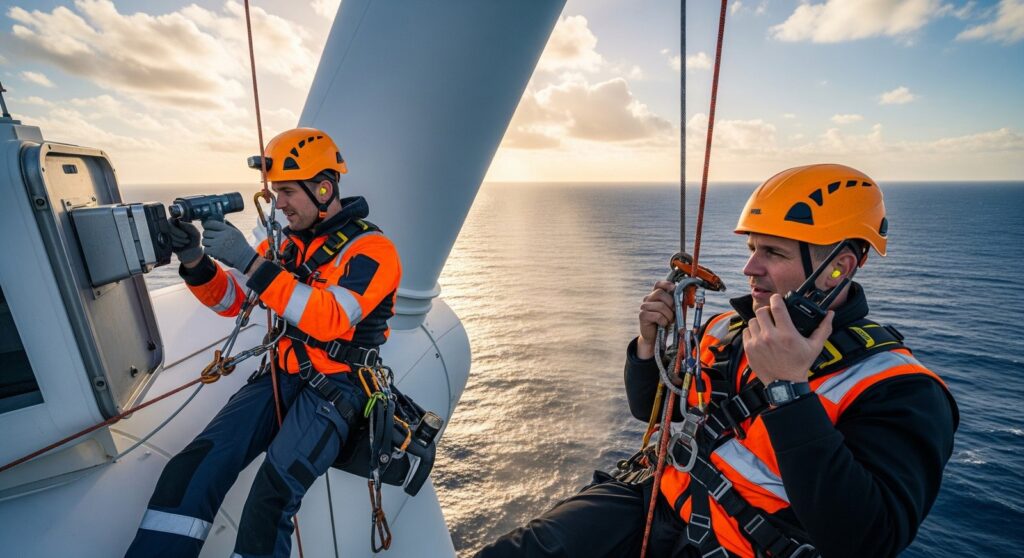
Types of Tasks Performed Efficiently
Rope access can handle many tasks, including full visual inspections and advanced non-destructive testing (NDT) to spot cracks or corrosion early. Technicians can weld, fabricate, apply coatings, and install or repair equipment.
Common routine jobs include facade repairs, window cleaning, painting, and structural checks. Teams also handle special tasks like banner installs, safety netting, and urban tree work in hard spots. Doing many tasks using the same access setup keeps work flowing and reduces downtime.
Case Studies: Downtime and Cost Reduction Outcomes
Real projects show strong results. In oil and gas, rope access has cut inspection times by 50%, speeding up checks on critical assets. In commercial building care, facade repairs that might take 10 days with scaffolding were done in 5 using rope access, greatly cutting impact on tenants.
One industrial site reduced routine downtime from 8 days to 4 by switching to rope access, lifting overall productivity. Another high-rise window project finished in 2 days instead of 5. These results show rope access is a strategic choice that delivers clear gains in speed, cost, and continuity.
Long-Term Business Advantages of Rope Access Service
Beyond quick savings and less downtime, building rope access into regular operations brings long-term benefits. These include better maintenance planning, steady safety compliance, and a smaller environmental footprint, all helping create a stronger, more profitable business.
Better Maintenance Schedules
Rope access helps businesses move from reactive fixes to proactive and preventive maintenance. Fast deployment and low disruption make routine checks easy without large scaffolds or long site closures. Small issues get found and fixed early, avoiding big, costly problems that stop work for long periods.
Flexibility also allows work during off-peak hours or overnight, so daytime operations can continue. Teams can run tasks in several areas at once, and use tools like real-time monitoring and NDT. This supports a more predictive plan and extends the life of equipment and structures.
Sustained Safety and Compliance
Strong standards and ongoing training build lasting safety and compliance in rope access. By following international rules from groups like IRATA and SPRAT, businesses can meet and often exceed legal needs. Better safety lowers the chance of incidents, which reduces legal risk, insurance costs, and damage to reputation.
Also, using less heavy gear and a small ground footprint reduces hazards for everyone on site. A solid safety record, kept through steady best practices, strengthens a company’s image and builds trust with staff and stakeholders.
Common Questions About Rope Access and Cost Savings
As more companies look at rope access, common questions come up about money and practical use. Clear answers help explain why rope access is a smart investment, not just another access method.
What Are the Main Financial Benefits?
- Lower equipment and setup spend: no scaffolding or heavy machinery rentals, less transport and storage.
- Reduced labour costs: smaller teams and faster completion cut total hours.
- Less downtime: work can be up to 30% faster, and inspection time can drop by up to 50%.
- Fewer permits in many cases: simpler admin and lower overheads.
How Quickly Can Rope Access Mobilise Compared to Scaffolding?
Speed is a clear advantage. Scaffolding can take days or weeks to plan, build, and remove. Rope access teams can be on site and working within hours, with setup sometimes taking about 30 minutes. This quick response is important for urgent checks or emergency repairs, where every hour of downtime costs money. Faster setup helps stop small problems from growing and gets operations back to normal sooner.
Is There a Limit to the Types of Jobs Rope Access Can Perform?
Rope access is very versatile, but there are limits based on the task, site, and weather. Technicians can handle inspections, NDT, welding, repairs, painting, cleaning, and installing equipment. Jobs that need very heavy lifts, large material moves, or long work by big crews may still need traditional methods.
Bad weather such as high winds or storms can pause rope access for safety. Even with these limits, ongoing advances in training, gear, and tech keep widening what rope access can do, making it fit for a growing range of industrial and commercial work.

“Welcome to the ultimate destination for the best Instagram captions! I’m James, your go-to guide for crafting the perfect caption to match any moment. Whether you’re posting a selfie, a scenic shot, or a fun group picture, I’ve got you covered with creative, catchy, and relatable captions for every occasion. Dive into my collection and discover the perfect words to express yourself on Instagram!”